live · web, app in testing · 2026 · founder, product + engineering
FerryFetch: the ferry app that says when it doesn't know.
live ferry tracker for five operators
 Visit ferryfetch.com ↗
- 5operators
- 94routes
- 1,009sailings in a day
- 37Kviews on the first Reddit post
01 · the problem
If you live on an island, the ferry is your road. Delays build up through the day and the timetable never shows it, so most riders find out at the terminal, already in the lineup. To avoid that, people check the operator's site, a ship tracker and a weather app before every crossing.02 · what I built
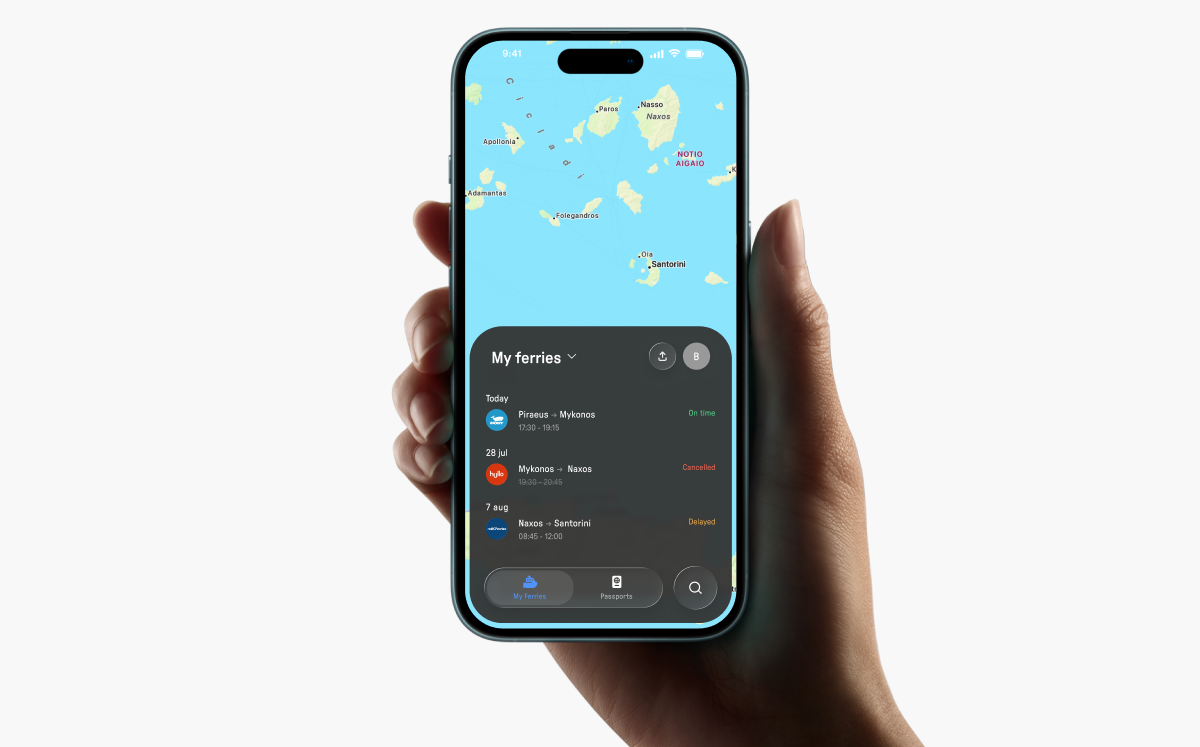
FerryFetch puts the whole trip in one place, across operators. On ferryfetch.com, with no account, you can:
- pick a route and see the boat on a live map, whether it left late and by how much, and when it gets in
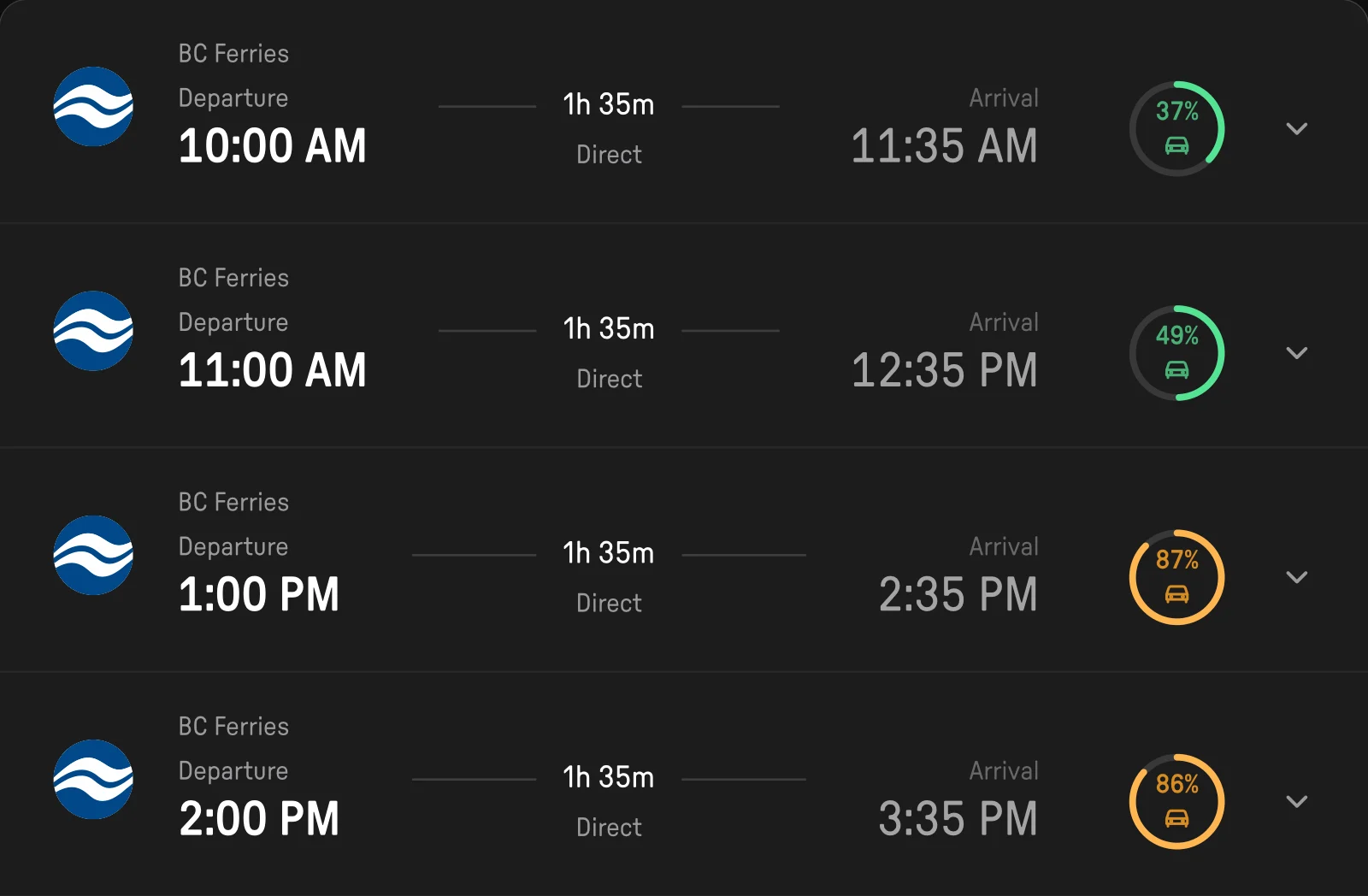
- check today's sailings with how full the car deck is, plus a button to the operator's own booking page
- open a terminal page with the boats heading in, next departures, wind and the terminal cameras
- use an arrive-by tool that tells you when check-in opens and when to be there
Under it, a worker reads live vessel positions (AIS) and matches them to operator schedules. A sailing moves through five states (scheduled, underway, arrived, delayed, cancelled) and counts as late once its ETA is more than five minutes behind. Every ETA carries a high, medium or low confidence label based on how fresh and steady the signal is. When a boat goes quiet, the page says "signal lost, showing last known position" rather than showing a frozen dot as live. The iOS and Android app (Expo) shares the same core logic and is in testing.
- Next.js
- Expo
- Hono + tRPC
- Postgres + Prisma
- AIS vessel data
- Claude API
03 · how AI helped
- Reading timetables: BC Ferries publishes schedules as PDFs. Claude reads each one into structured sailing rows. A plain parser then re-reads the day ranges, and when the two disagree the parser wins and the mismatch is logged.
- Triage of data-quality checks: Claude Haiku sorts audit findings into real defect, transient glitch or duplicate, with a confidence score. It is advisory only: nothing is filed or changed without me, and its answer is rejected if it cites evidence it was not given.
- Building with agents: I build FerryFetch with AI coding agents working from one shared rules file. An onboarding skill takes an operator's name and website and produces a full, shadow-mode integration: schedules, vessels, routes and pages. Washington State Ferries went through the same pipeline as the first two operators.
- Where AI is not used: no model decides whether a sailing is late, cancelled or which boat is running it. Status comes from deterministic rules, so every claim on screen can be traced back to a position or an operator time.
04 · what changed
My first post on r/VancouverIsland was the top post on the sub that day: 37K views, 90% upvoted, and about 65 to 70 waitlist signups. Riders asked for Coho, the Clipper, terminal cameras and seeing the boat mid-crossing, and all four shipped. By October 27 the tracker covered 5 operators, 94 routes and 63 ferries, 1,009 sailings that day.05 · what I'd do differently
Before turning on delay alerts, I graded them against the operator's own published departure and arrival times. Alerts built on mid-crossing ETAs would have fired on many sailings that arrived on time, and our lead over the operator's own notices was close to zero. I'd build that grader first: no claim reaches a rider until it has been checked against what actually happened, route by route.credits
Product design by Balla Diagne.